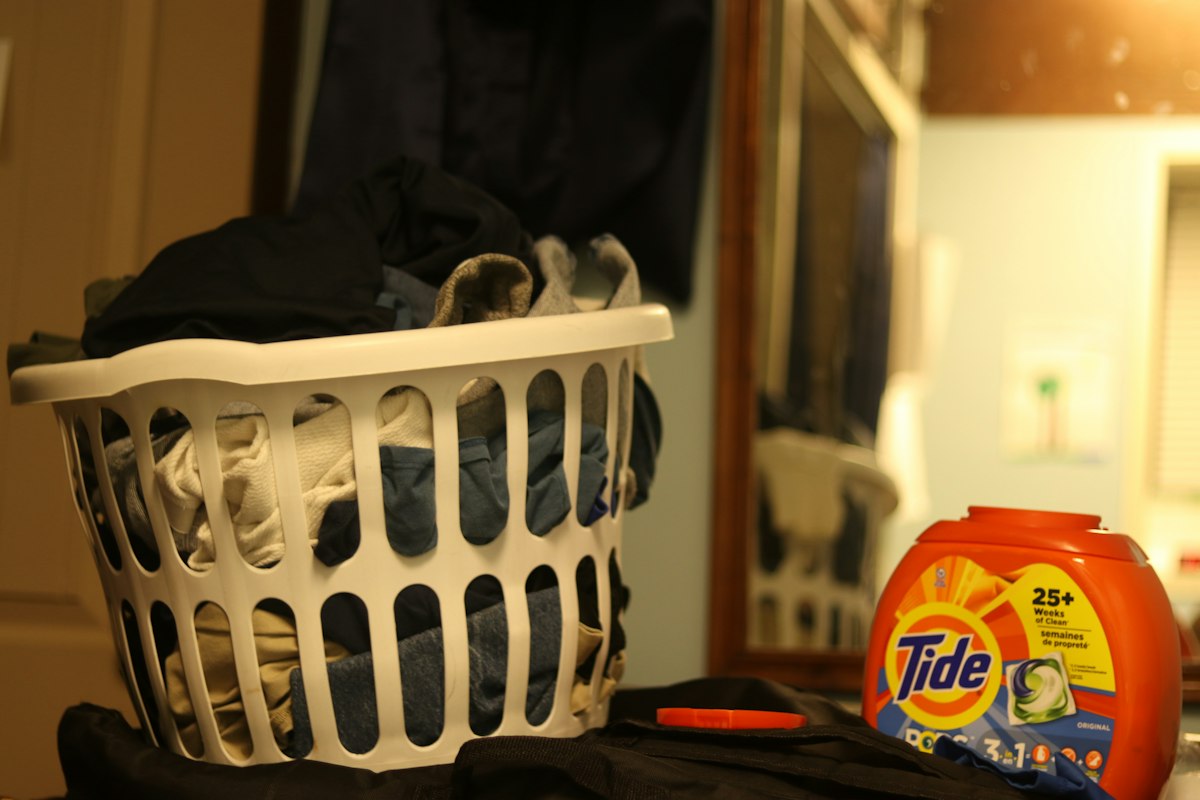
Laundry has several endings: the machine stops, the clothes dry, and eventually the basket empties. Planning only for the first one can leave the rest of the task scattered across a bedroom. A smaller, complete load can be easier to live with.
Choose a load you can finish
Before starting, look at the drying space and the time available afterward. Follow the care labels and machine instructions when sorting. If the rack is already full, putting away what is dry may help more than beginning another cycle. The useful measure is clothing ready to wear, rather than machines kept busy.
Keep the folding surface temporary
Use a clear part of the bed or table, then put everything away before using that surface again. Separate the clothes by their destination as you fold. A small stack for each drawer saves carrying the same items around the room several times. Leave delicate items arranged according to their care instructions.
Give unmatched items a limit
Keep stray socks in one small container. Check it when the next load is finished instead of opening a new mystery pile. If a garment needs repair, place it with a written note about the problem. That separates a real next step from something that simply keeps returning to the basket.
Close the loop
Return the empty basket and clear the drying rack when possible. If the task has to pause, choose a specific next step, such as putting away the towels after dinner. Notice whether smaller loads fit your space better. The routine should match your actual week, including the days when there is little spare time.
Which part of laundry tends to get left until later?
This is an original editorial example, drafted with AI assistance for the Little Days preview. It is not a submitted user story or a claim of personal experience. The photo is illustrative stock photography.