A linen closet does not need matching containers to make sense. Often the biggest improvement comes from deciding what one shelf is for, then leaving enough space to take an item out without pulling its neighbors along with it.
Give the shelf a job
Choose a single category, such as everyday bath towels or one bed size. Move unrelated items to their proper locations before arranging the shelf. If several sizes share the cupboard, separate them with a simple label or an existing basket. Keep the words specific enough that another household member can follow them.
Fold for the available depth
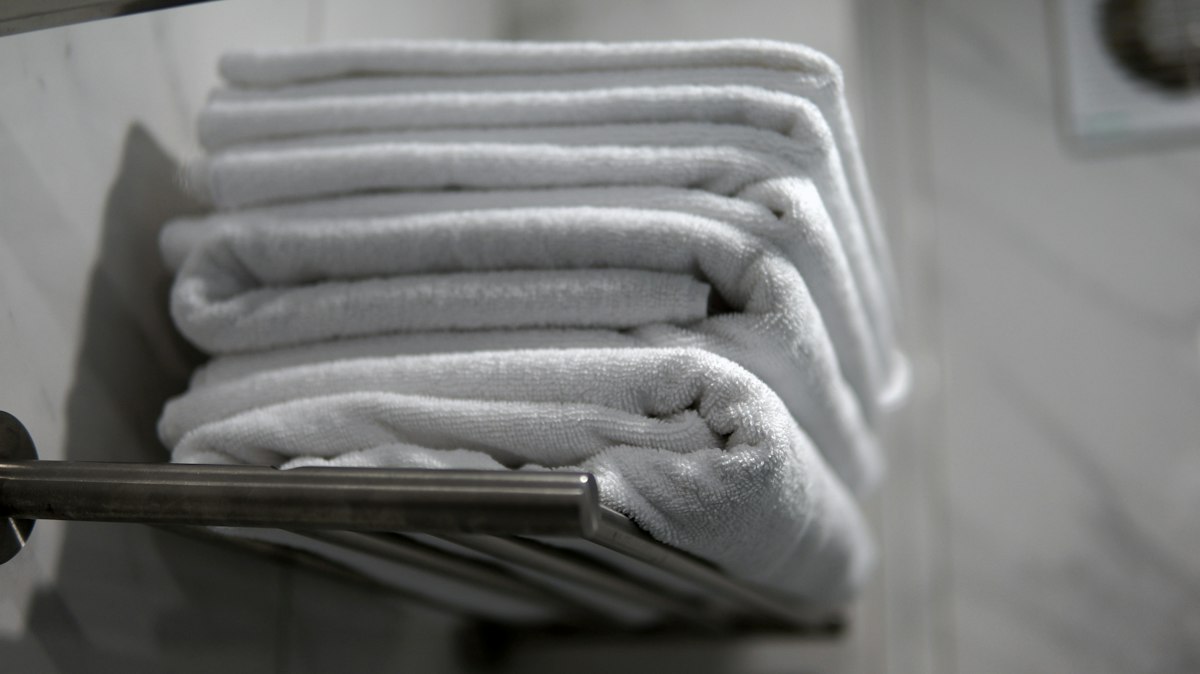
Measure the space with one folded towel rather than refolding the whole collection immediately. Try a fold that leaves the front edge visible and the door easy to close. Stack only as high as you can remove an item comfortably. A shorter stack may be more practical than a perfectly full shelf.
Keep sets recognizable
For bedding, group the pieces that belong together in a way that suits the material and space. A loose fabric tie or a labeled shelf section can work. Check that everything is completely dry before storing it. Put special-occasion linens away from the everyday items so they are not constantly disturbed.
Use what the shelf reveals
If the shelf is still crowded, count what is actually used between washes. Set aside damaged pieces for an appropriate repair or reuse decision. Do not force every linen you own into the newly organized space. Leave a gap for the towel currently hanging in the bathroom to return after laundry day.
Which household shelf would be most satisfying to make useful again?
This is an original editorial example, drafted with AI assistance for the Little Days preview. It is not a submitted user story or a claim of personal experience. The photo is illustrative stock photography.