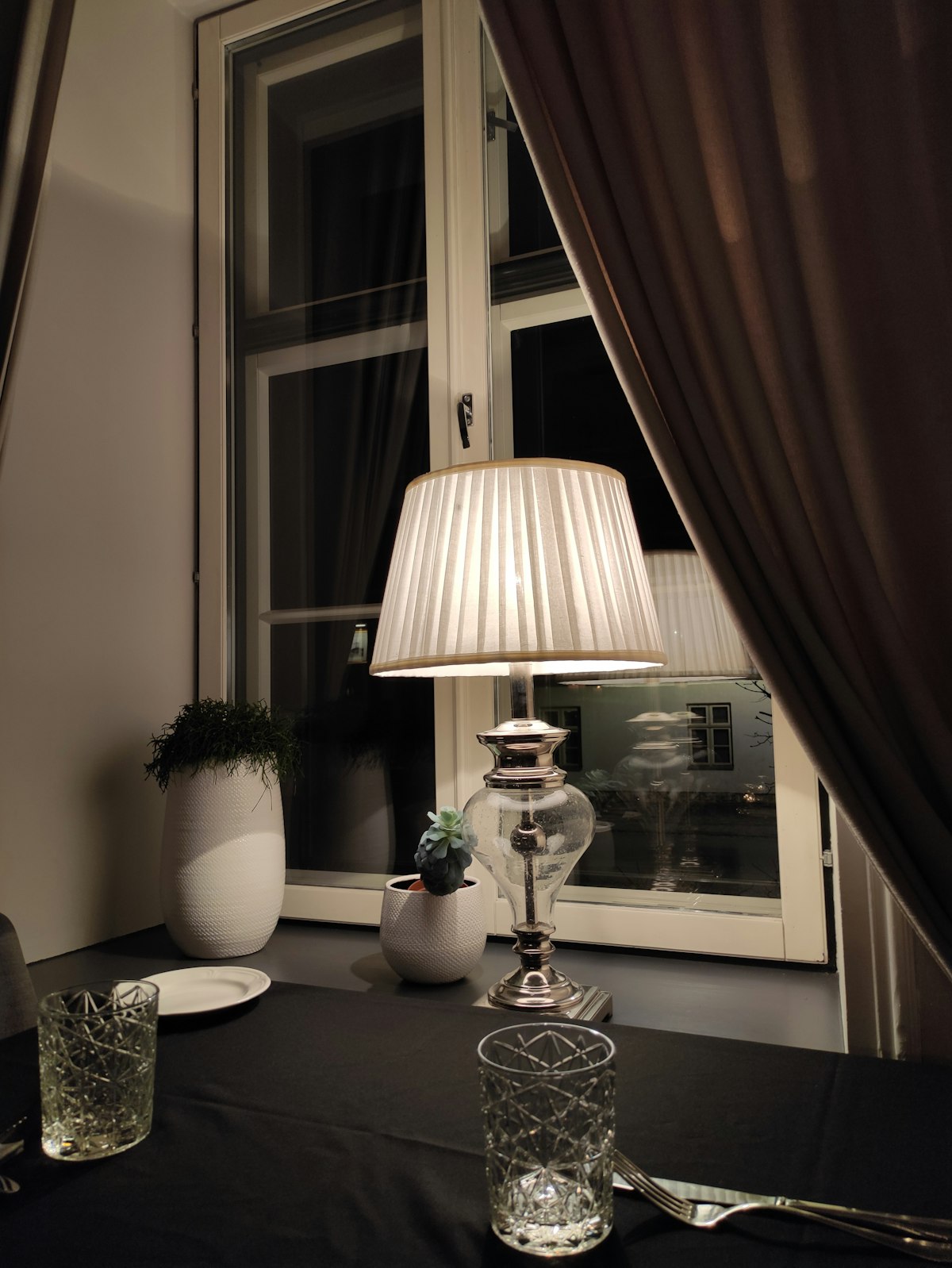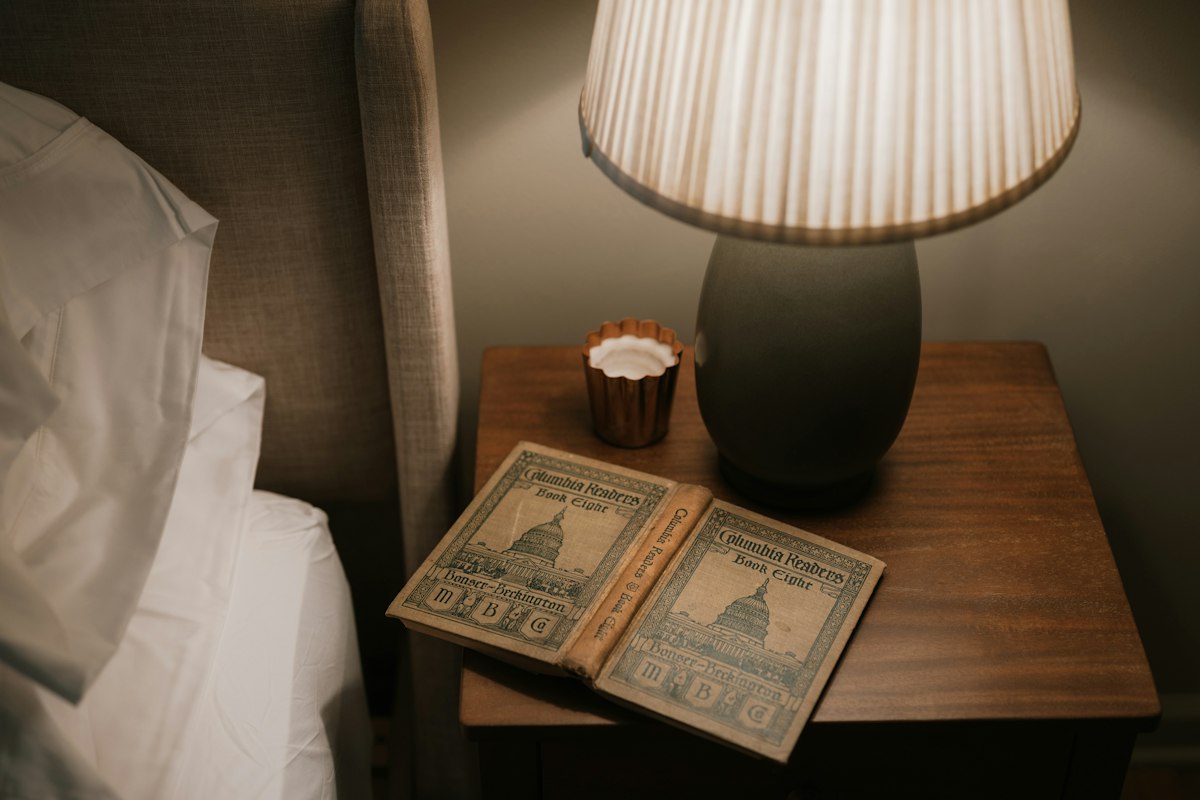
A bedside table can quietly collect the unfinished business of a day. Receipts, charging cords, and three half-read books all arrive with a reason. Giving the surface a clear purpose helps it stay useful without asking the entire bedroom to look perfect.
Start with an ordinary evening
Notice what you actually reach for before settling in: a lamp, glasses, water, or one book. Place those items first. Leave enough room to set something down without balancing it on another object. A table that works in dim light needs a little more open space than a display arranged for a photograph.
Move the backlog elsewhere
Take unfinished paperwork to the place where you handle it. Return extra books to a shelf, keeping the one you are reading nearby. If a drawer is available, use a small divider for easy-to-lose items. Avoid hiding a whole pile there; a drawer is more useful when you know what it contains.
Give the cord a route
Position the charger so it reaches comfortably without crossing a walking path. Use the equipment as its manufacturer directs, and keep liquids away from electrical items. A loose cable can often be guided behind the furniture without buying a new organizer. Check that the table still moves easily for cleaning.
Leave a little personality
A postcard, a tiny vase, or a familiar photograph can stay if there is room for it. Remove one thing when you add another rather than gradually building a second layer. After a week, judge the setup by whether you can find your glasses, not whether it matches a bedroom in a catalog.
What earns a permanent place beside your bed?
This is an original editorial example, drafted with AI assistance for the Little Days preview. It is not a submitted user story or a claim of personal experience. The photo is illustrative stock photography.