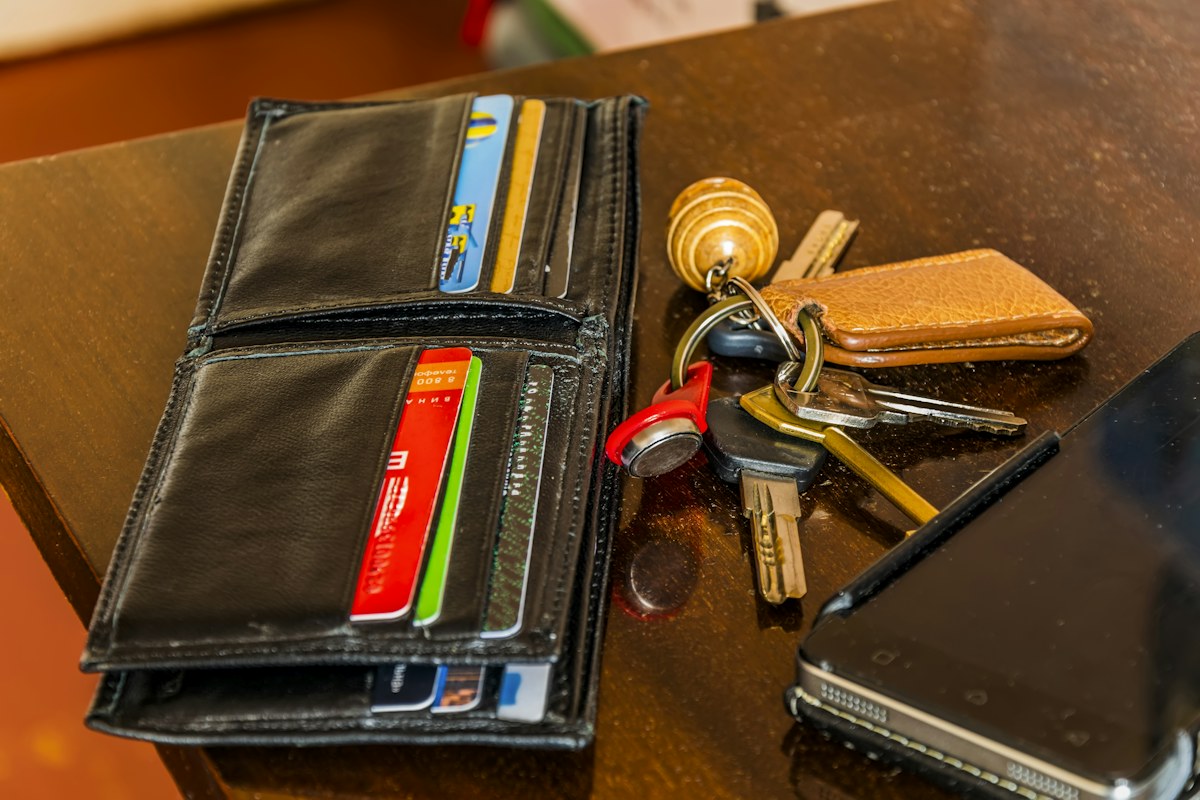
An entryway fails when it becomes a place to postpone decisions. A parcel waits without a label, a bag holds last week’s receipt, and keys land wherever a hand happens to be free. Give those objects different jobs before buying a larger basket.
Observe one arrival and one departure
Come home with the things you normally carry. Notice which hand holds the keys, where you put a bag down and whether you need a seat to remove shoes. Repeat the route in reverse. If a storage spot requires opening a cupboard while balancing several objects, it may be inconvenient even when it looks tidy.
Keep the full door swing, walking route and any access to switches clear. In a narrow hall, a shallow tray on existing furniture may work better than a new floor unit. If you cannot place a station by the entrance, use the nearest surface on the route you already take.
Give three groups three different destinations
| Group | What belongs here | Boundary |
|---|---|---|
| Daily carry | Keys, travel card, one everyday bag | A tray or hook you can reach directly |
| Leaving soon | Borrowed book, parcel, item for a friend | A small basket with a written destination |
| Needs a decision | Unopened letter, unidentified cable, receipt to check | A separate temporary inbox with a review time |
A return basket is not useful if everything inside still needs research. Put a note on the object: “Library, due Friday, take on Thursday’s grocery trip.” For a parcel, prepare the label and confirm the drop-off location before calling it ready. Do not display addresses or private paperwork where visitors can easily read them.
A worked layout for a small hall
Suppose an existing shelf is 45 cm wide and 20 cm deep. A 15 cm tray occupies one end, leaving room for one folded bag. A return basket sits on a lower shelf, without protruding into the walkway. These are example measurements, not a universal furniture plan: measure your own space and leave clearance for fingers, doors and the objects you actually use.
Keep chargers where devices are normally charged, rather than adding a live charging pile to the entrance. Label a spare cable only after checking which device it fits. Put unknown cables in the decision inbox; do not test damaged cables or assume connectors with similar shapes are interchangeable.
Make reusable bags complete a loop
After unpacking shopping, check each bag for spills and follow its care instructions. Return clean, dry bags to the departure spot. A single flat bundle is easier to carry than several bags scattered around the home. If bags routinely stay in the kitchen, put a reminder beside the keys until returning them becomes part of unpacking.
Do not pack refrigerated food in the entrance overnight. Stage its empty carry bag or a written reminder instead. “Lunch in fridge” beside the keys is more useful than trying to store every item in one physical place.
Run a seven-day adjustment
For one week, note what repeatedly lands outside its assigned space. A tray that overflows with mail has been given two jobs. A hook that stays empty may be too high, hidden or awkward to reach. Change one part of the arrangement, then observe another arrival. Buying more containers before identifying the failure can simply create more places to search.
Finish the weekly check by delivering the return items and emptying the decision inbox through actual decisions. The measure of success is a smoother departure, not a permanently empty photograph of the hall.
Prepared with AI assistance for Little Days. Worked examples are illustrative, not reports of an editor’s personal experience. Follow the linked sources and the instructions for your own equipment or circumstances.
Updated October 30, 2026: expanded into a practical guide with examples and a local worksheet.