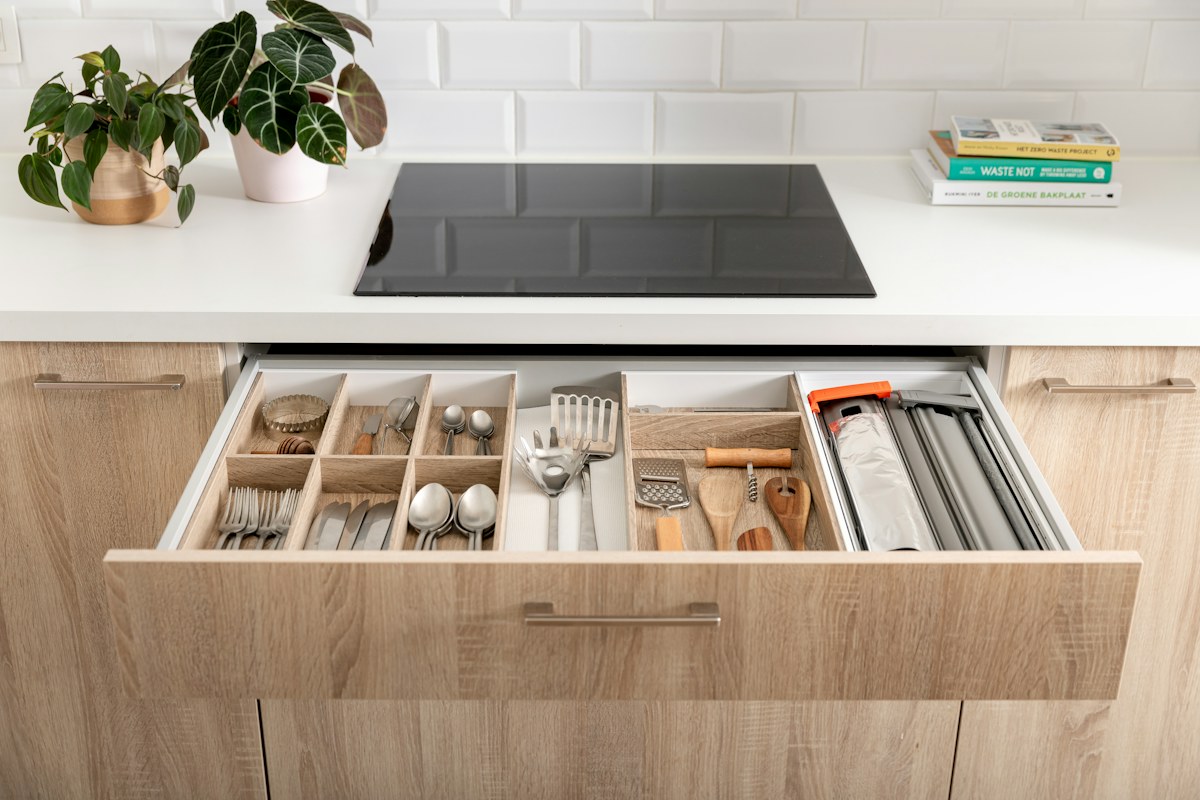
A catch-all drawer is useful until finding a pen means lifting everything out. You can give it a reset without buying a matching set of organizers or deciding how to organize the whole house.
Empty only what you can finish
Choose one drawer and put its contents on a clear surface. Group similar things together: writing tools, small office supplies, spare parts, and objects that belong in another room. Test pens and match unfamiliar pieces to an actual item if you can. Avoid throwing away an unidentified part merely because it looks unimportant; set it aside to identify before making that decision.
Name the drawer’s job
Decide which two or three categories belong here. A desk drawer might hold pens, sticky notes, and the charger you use at that desk. That does not mean it must also hold every charger in the home. Returning objects to the places where they are used often solves more crowding than finding a smaller container for them.
Try dividers you already own
Small boxes can help you test category sizes before buying anything. Check that the drawer can close without catching on tall items or loose cables. Leave the front section for things you reach for often. If one category expands beyond its space, review the category rather than stacking a second layer over everything else.
Make the finish visible
Return the grouped items, remove the temporary piles, and close the drawer. Open it again to check that each section stays in place. If the arrangement works, take a quick reference photo for yourself. Use that as a reminder of where things belong, not as a rule that the drawer must remain perfect every day.
What is the most unexpected thing you have found in an everyday drawer?
This is an original editorial example, drafted with AI assistance for the Little Days preview. It is not a submitted user story or a claim of personal experience. The photo is illustrative stock photography.