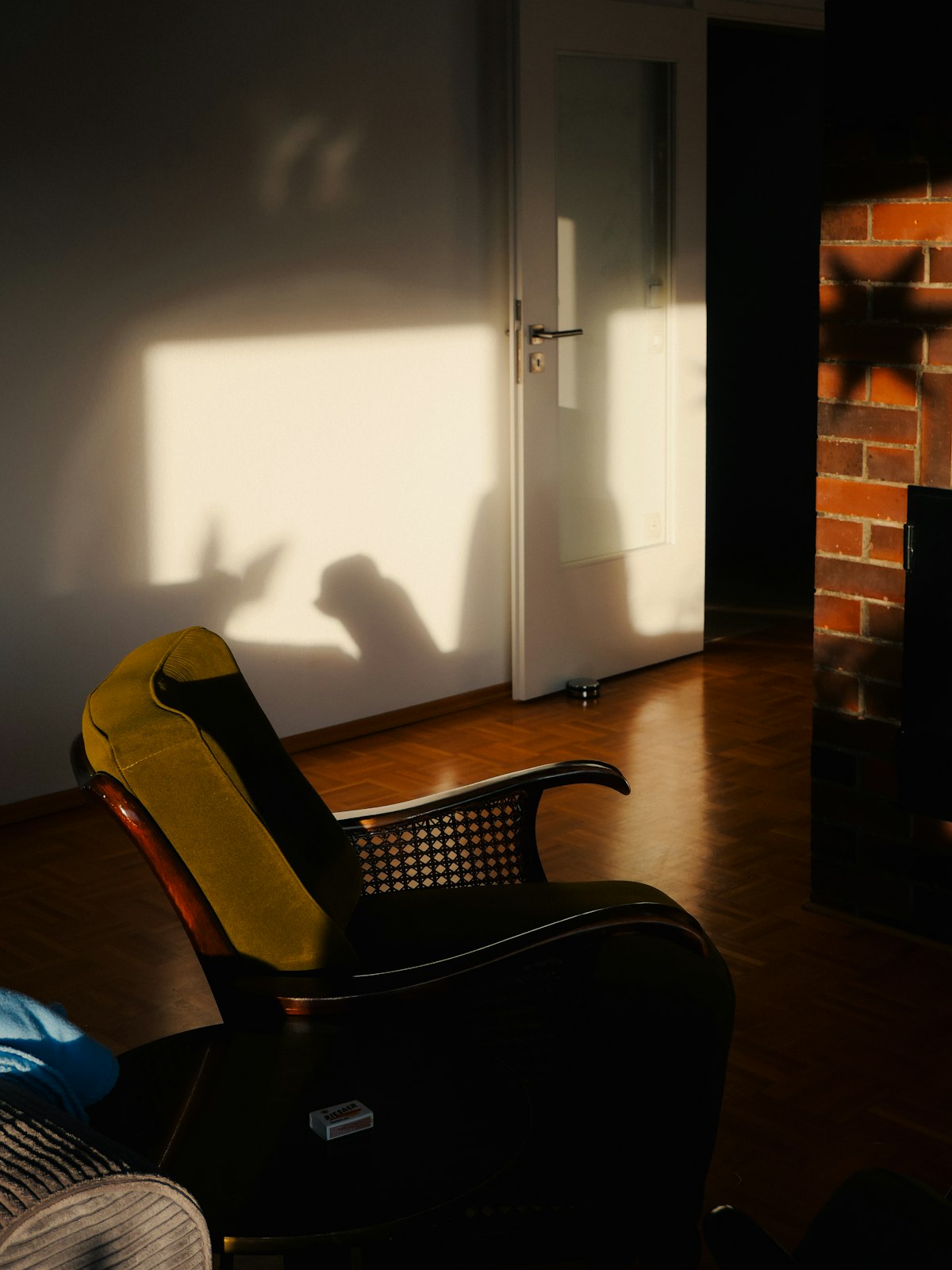
A patch of afternoon light can change an ordinary wall for a few minutes. Watching its edge move gives you a subject that is simple, temporary, and close at hand. You can photograph it or just notice it while the room slowly changes.
Find a safe, ordinary viewpoint
Look at a wall, floor, or table where light is falling through a window. Stay in a comfortable place rather than climbing or leaning awkwardly for a picture. Avoid photographing private details in the background. The subject can be as small as the shadow of a cup handle on a clear surface.
Choose the part that interests you
Notice the edge, shape, or contrast with the surrounding material. Move your viewpoint slightly to see how the composition changes. You do not need to add objects or stage the entire room. A close view of one shape may be more interesting than a photograph containing everything the light touches.
Make a small comparison
If you want, take two pictures a few minutes apart from roughly the same place. Keep the experiment short enough that it remains enjoyable. Compare the shapes rather than looking for a dramatic transformation. Sometimes the most noticeable change is the softness of an edge rather than how far the shadow travels.
Keep one image or one sentence
Choose a picture that records what caught your eye, or write a short description if you did not photograph it. Note the time and place for your own reference. The observation does not need a public audience. It can simply make a familiar room feel a little less familiar for an afternoon.
Where does the afternoon light make an interesting shape in your home?
This is an original editorial example, drafted with AI assistance for the Little Days preview. It is not a submitted user story or a claim of personal experience. The photo is illustrative stock photography.