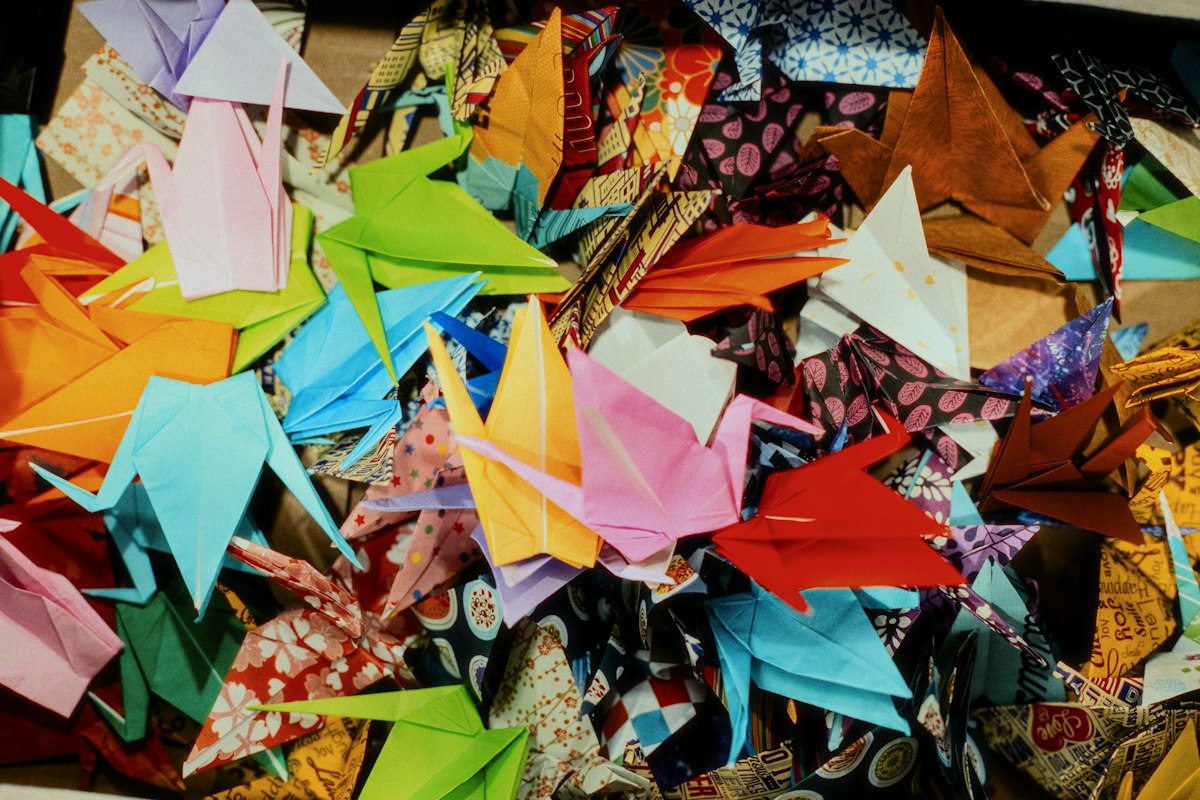
Paper folding begins with a very ordinary material and a sequence of small decisions. A simple model can offer enough challenge for an afternoon pause. Choose something suited to your experience and let the first attempt be a way of learning the instructions.
Choose a clear beginner pattern
Find instructions from a maker or teaching source that shows each stage clearly. Read through the sequence before starting and credit the source when sharing the result. Use the recommended paper shape and a manageable size. A complex finished model may look appealing, but a simpler one is often more enjoyable for a first session.
Prepare a flat working space
Use clean paper on a stable surface with enough room to turn it. Keep the instructions visible without balancing a device where it could fall. Fold one step at a time, checking the orientation of the paper against the diagram. A small rotation can change how the next instruction makes sense.
Pause when the shape stops matching
Unfold the most recent step and compare it with the example. Look for an edge folded to the wrong point or a corner facing the other direction. Starting again with a fresh sheet is also reasonable. The first model does not need to survive every correction in order for the session to be useful.
Keep one finished example
Place the model somewhere dry where it can be enjoyed without getting crushed. Write down the pattern name and source if you want to repeat it. Share a photograph of your own attempt with an honest description of the process. A slightly uneven shape can still record a satisfying hour of making something by hand.
Which simple paper shape would you like to learn to fold?
This is an original editorial example, drafted with AI assistance for the Little Days preview. It is not a submitted user story or a claim of personal experience. The photo is illustrative stock photography.