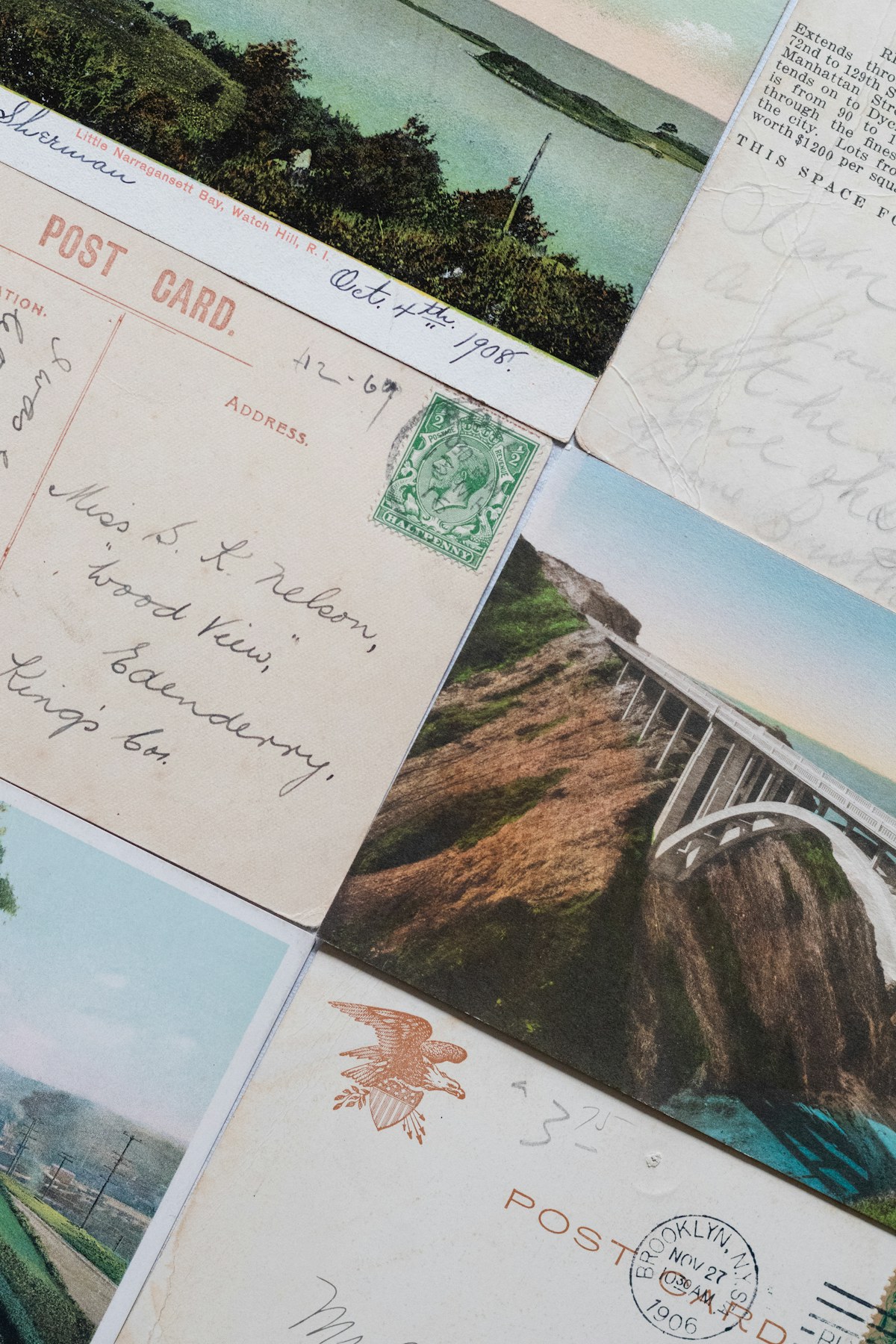
A postcard does not have to announce a trip. It can hold a small observation from a normal week: a new flower, a sentence from a conversation, or the good bread you found on the way home.
Choose one scene
Write about something small enough to fit into a few sentences. Describe the sound, color, or detail that made you notice it. You do not need to report everything that has happened since you last spoke. A single clear scene can make the note feel more personal than a compressed summary of a whole season.
Use a card you enjoy handling
A plain card, a small drawing, or a photograph you have permission to print can work. Leave enough space for a readable message and the mailing information. If you make an unusual card, check the postal service’s current mailing guidance instead of assuming every size and material can travel the same way.
Write with the reader in mind
Mention why the detail made you think of this person. Perhaps they enjoy gardens, always ask about your neighborhood, or share your fondness for a particular color. Keep private information out of an open postcard. If the message is personal, a note inside an envelope may be a better choice.
Let the gesture stay small
You do not need to create an ongoing correspondence schedule unless you both want one. Send the card, note that you have mailed it, and let the gesture stand. If you later photograph it for a public post, hide addresses and other private details. Sharing the idea is enough; the recipient’s identity does not need to become part of the story.
Who would enjoy a few lines about an ordinary moment from your week?
This is an original editorial example, drafted with AI assistance for the Little Days preview. It is not a submitted user story or a claim of personal experience. The photo is illustrative stock photography.