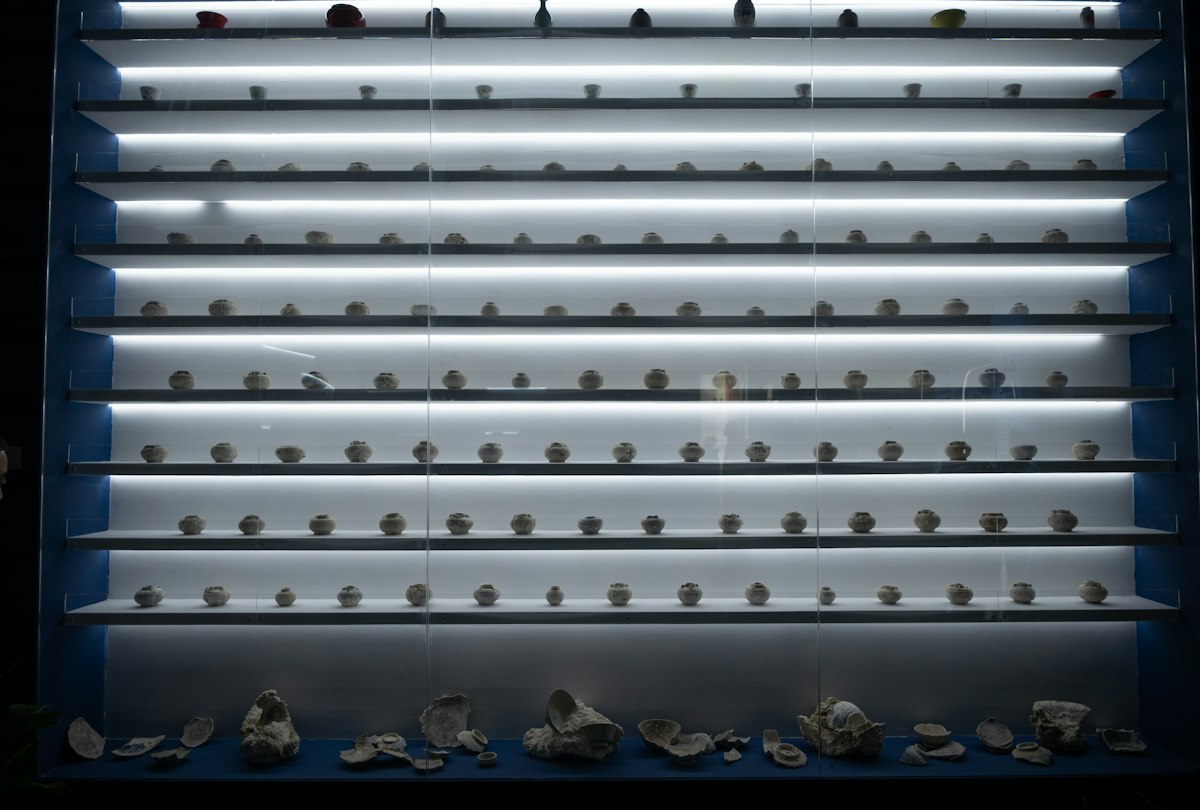
A handful of small objects can tell a story through their differences: a ticket, a button, a souvenir, or an old key that no longer opens anything. A collection becomes easier to enjoy when its boundary is as clear as its theme.
Choose what connects the pieces
The connection might be a place, a color, or a period in your life. Explain it in one sentence. If an object has no relationship to that idea, give it another home. A loose theme can still be meaningful, but knowing the connection helps you decide what belongs when a new piece appears.
Give the collection a container
Try one small box, tray, or shelf section that suits the objects. Keep sharp or tiny items stored appropriately and out of reach where needed. Leave space to lift a piece without disturbing everything else. The container is a practical limit, not a challenge to fit in as much as possible.
Write the story you might forget
A few words can identify where an object came from or why you kept it. Distinguish what you know from what you only guess. If the story belongs to someone else, ask before sharing it publicly. A collection is more interesting when the memories are accurate and the private parts remain private.
Review when a new piece arrives
Decide whether the new object adds something you want to remember. You can rotate pieces instead of expanding the display. Let go of items that no longer matter through an appropriate route. A small collection can remain complete even as its contents change, because the purpose is attention rather than accumulation.
What would connect the objects in your own tiny collection?
This is an original editorial example, drafted with AI assistance for the Little Days preview. It is not a submitted user story or a claim of personal experience. The photo is illustrative stock photography.