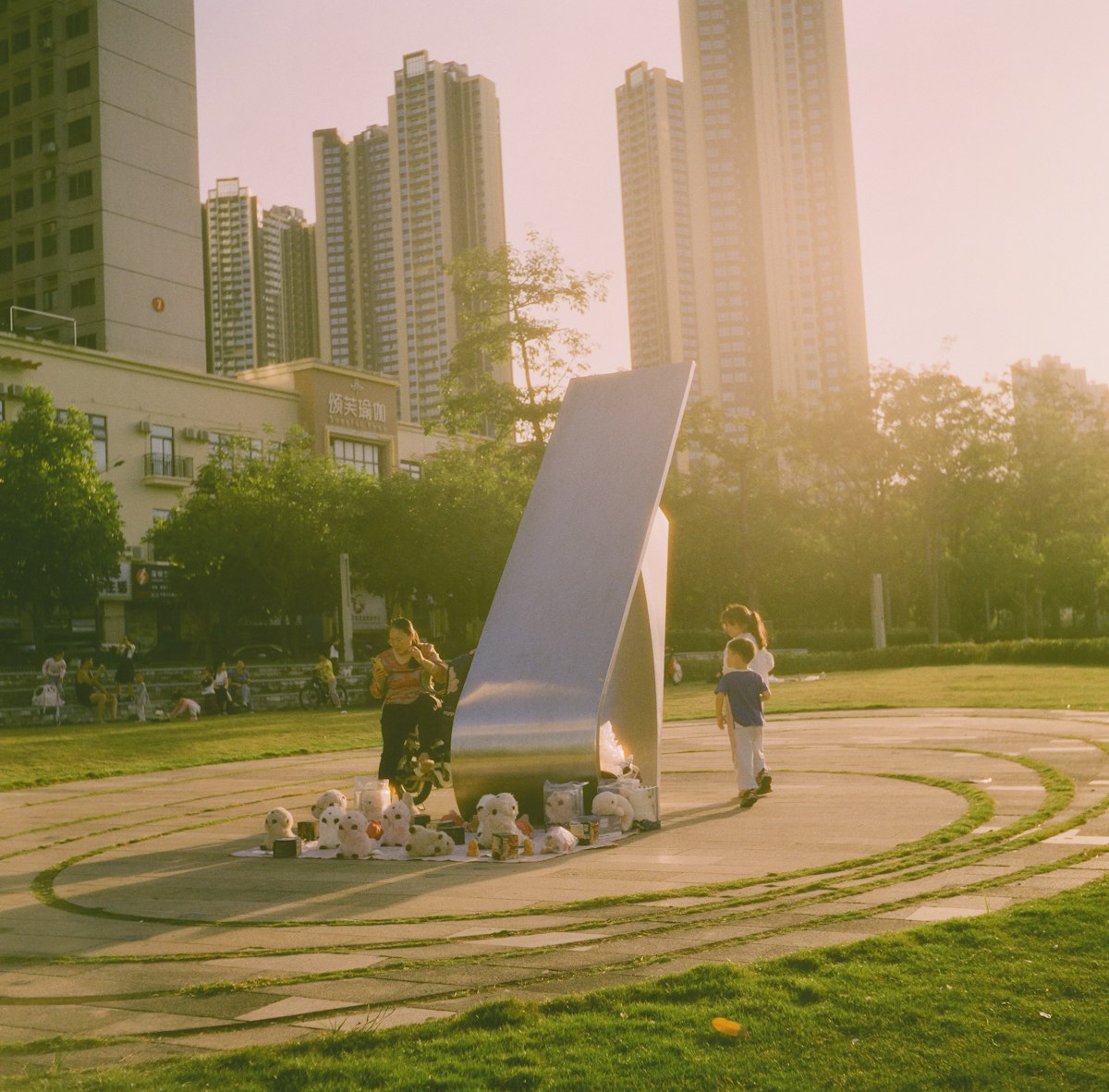
Public art can become part of the background when you pass it often. Stopping deliberately gives you time to see its scale, materials, and relationship to the surrounding space. A short visit can begin with one question about what is actually in front of you.
Choose an accessible public work
Pick a piece you can view from a permitted area without obstructing others. Check current access information if the site has opening hours. Consider a location near an errand or a familiar route. You do not need to organize a citywide art tour to give one work a proper look.
Look before reading the label
Notice shapes, colors, materials, and how the work meets the surrounding buildings or landscape. Walk around it only where access is allowed. Avoid touching or climbing unless the installation explicitly invites that interaction. Your first observation can stay simple: a surface, a repeated line, or a detail visible from a particular angle.
Read the available context
Look for the artist’s name, title, date, and any public explanation. Separate the provided facts from your own interpretation. If there is no label, a local cultural organization may have information you can check later. Not knowing the full story is a reasonable starting point for curiosity.
Share a considered reference
If photography is allowed, credit the artist and title when sharing an image of the work. Keep other visitors’ privacy in mind. Write your response in your own words rather than copying the entire explanatory panel. A short observation about one detail can invite someone else to look more closely on their next visit.
Is there a public artwork you have passed many times without stopping?
This is an original editorial example, drafted with AI assistance for the Little Days preview. It is not a submitted user story or a claim of personal experience. The photo is illustrative stock photography.