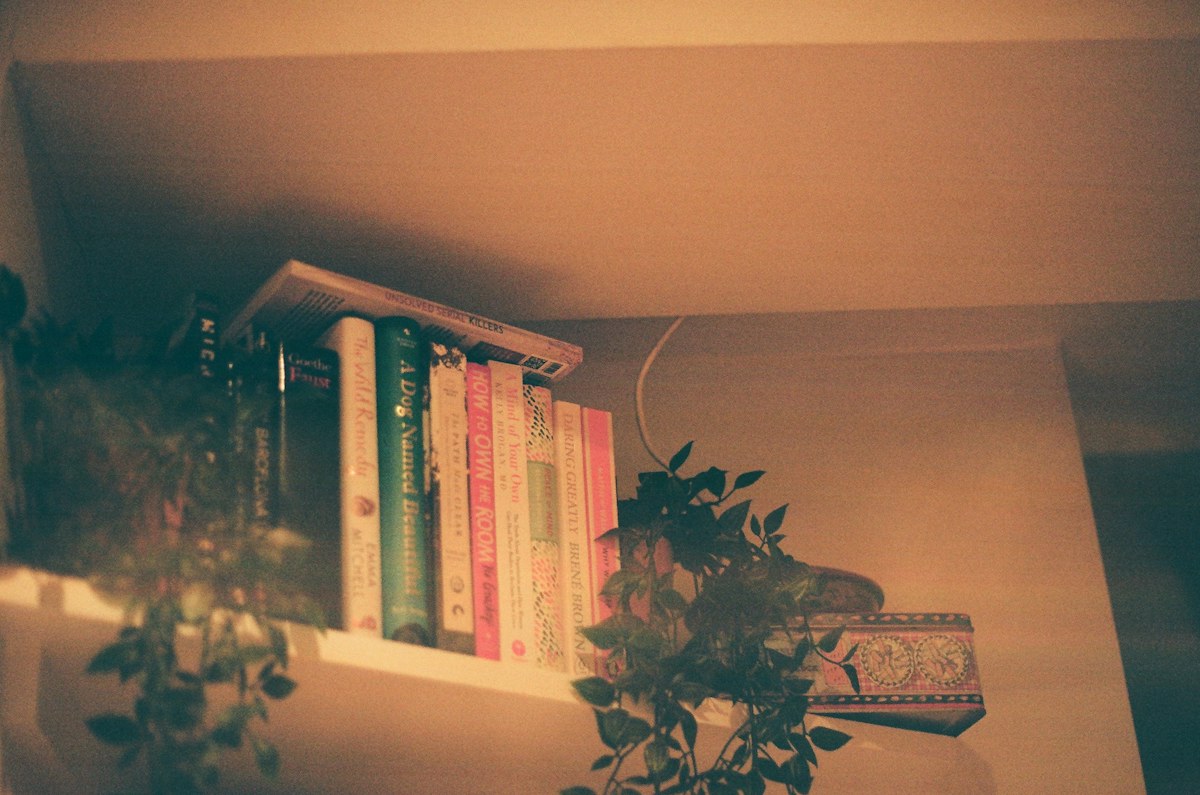
A bookshelf can be a working part of a room instead of a finished display. The books you use most do not always belong in a perfectly arranged row. A little distinction between reading and storing can make the shelf more useful.
Make an active reading space
Choose a short section for books you are reading or expect to open soon. Keep the selection small enough that you can see every spine. If you read in another room, carry one book there instead of building a second stack that slowly becomes permanent. Put a bookmark inside before returning it so reopening the book takes very little effort.
Give borrowed books a separate place
Library books and books lent by friends need a different kind of attention. Put them together and keep return dates in the system you already check. A handwritten note beside the books can work if the shelf is somewhere you actually look. When a book is ready to go back, move it to your outgoing bag rather than leaving it among your own collection.
Leave a gap on purpose
A small empty section makes room for a book being used elsewhere and helps you slide volumes in without forcing them. You do not need to fill every gap with an ornament. Check the furniture’s instructions before changing shelf positions or adding a heavy stack, and keep frequently handled books where they are comfortable to reach.
Let the display change naturally
Keep a postcard or small object only if you enjoy seeing it there. After a few weeks, notice which books you reach for and which arrangements are awkward. A shelf that changes with your interests can feel more personal than one that is frozen for a photograph. The goal is to make opening a book easier, not to make every shelf match.
Which book always seems to find its way back to your bedside or favorite chair?
This is an original editorial example, drafted with AI assistance for the Little Days preview. It is not a submitted user story or a claim of personal experience. The photo is illustrative stock photography.