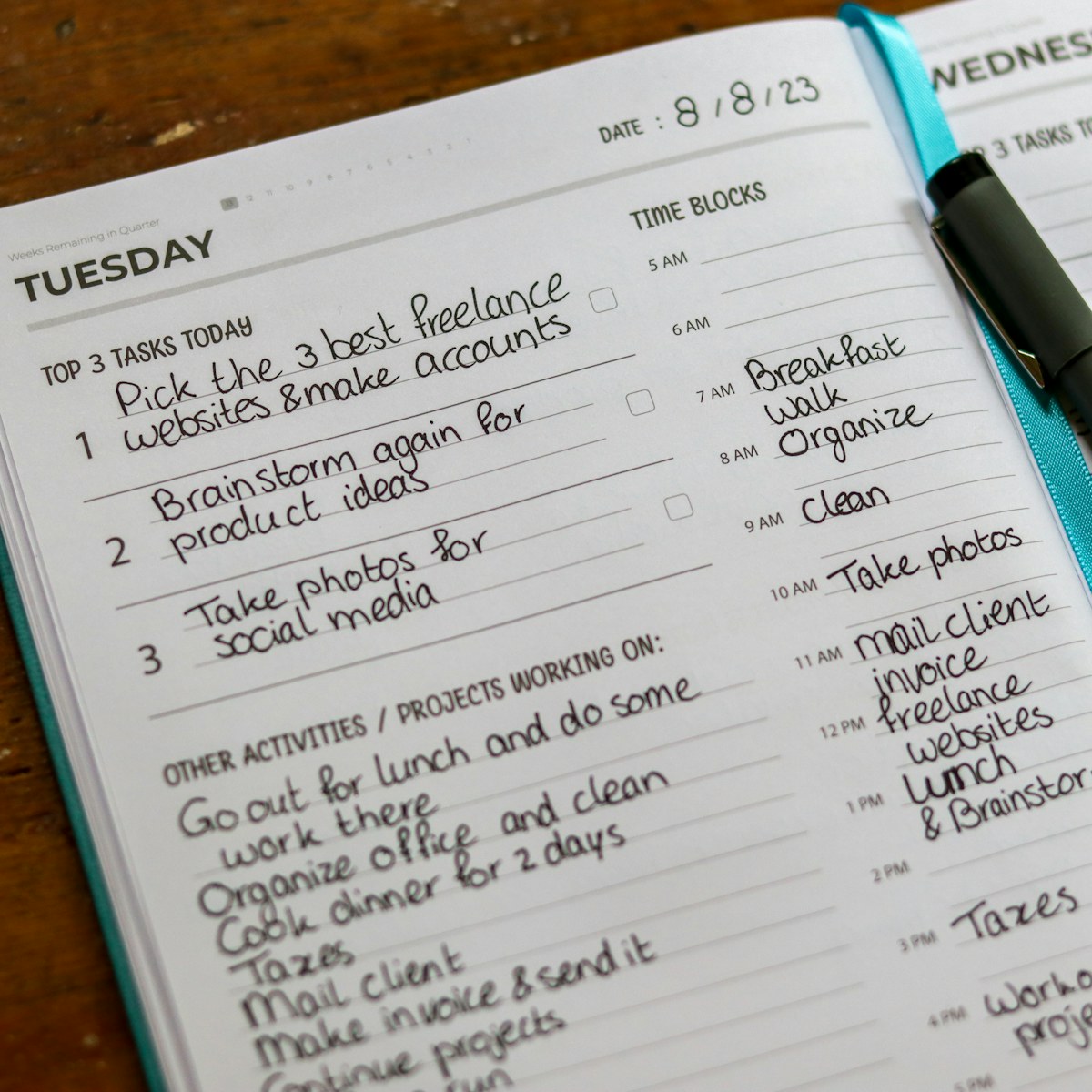
Returning to an unfinished project is easier when you can remember where you stopped. A short handover note can hold the next action, the decision you already made, and the thing you do not need to reconsider.
Write where you are, in plain language
Describe the current state of the task. “The photos are selected; captions are not written” is clearer than “finish photo project.” Include the name or location of the file if that is relevant, but avoid putting passwords or other sensitive information into a casual note. The goal is to reduce the time spent reconstructing what you were doing.
Make the next action small
Choose an action you could start without another planning session: write the first caption, measure the shelf opening, or email one question. If the action depends on somebody else, name the dependency and when you intend to check back. This keeps a waiting task from looking like something you should have completed through effort alone.
Remember the decision already made
Add a sentence about anything you chose and why. You might have decided to keep the current layout because it fits the room, or postpone a purchase until you have measured. A little context can prevent you from reopening the same decision each time you return. You are allowed to change your mind later, but it helps to know what the earlier reasoning was.
End with permission to adjust
The next week may arrive with different demands. Read the note as useful information, not as an order from a more optimistic version of yourself. Keep, shorten, or postpone the task based on what is actually possible. A good handover makes returning easier even when the original plan needs to change.
What could you write today that would make one unfinished task easier to return to?
This is an original editorial example, drafted with AI assistance for the Little Days preview. It is not a submitted user story or a claim of personal experience. The photo is illustrative stock photography.