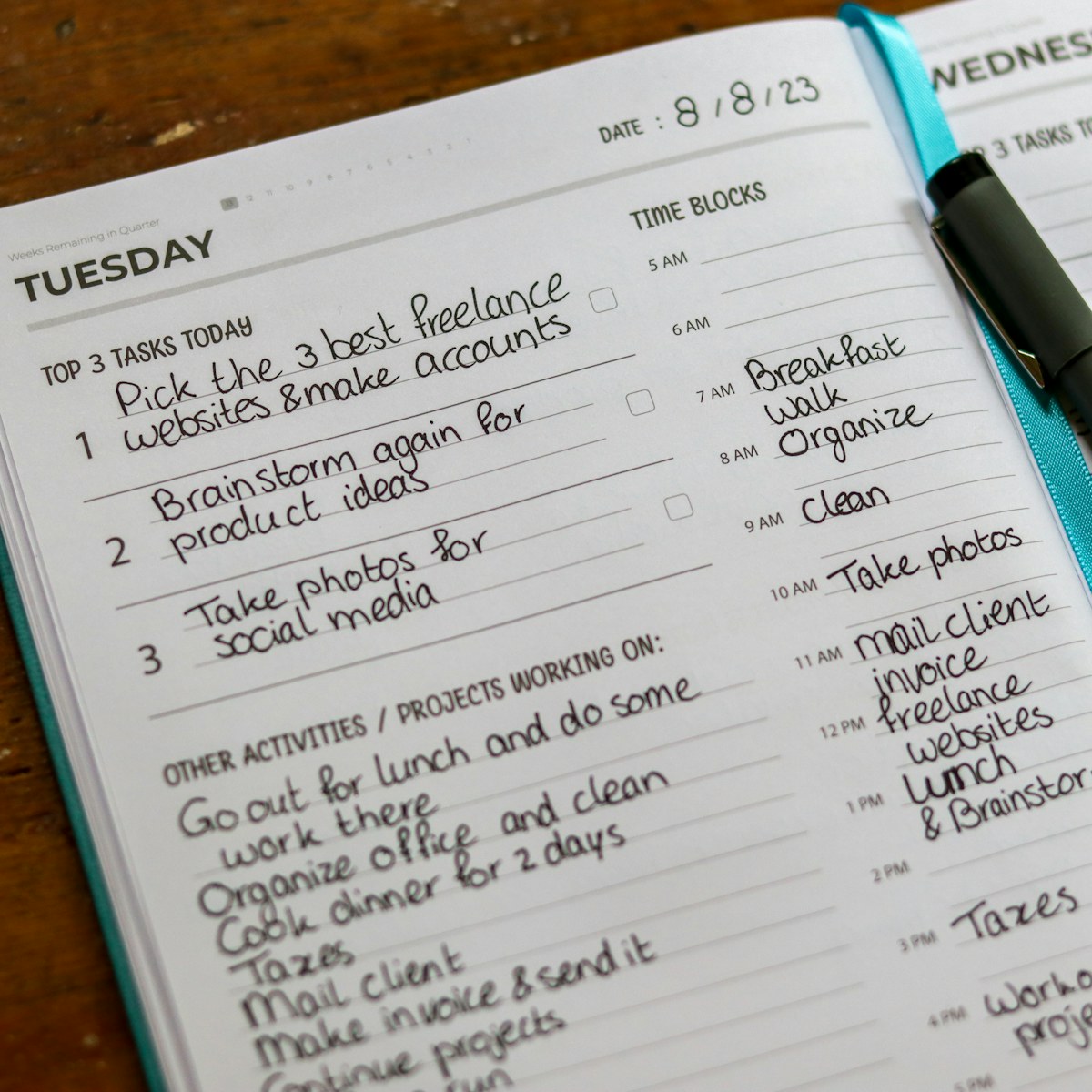
It is easy to write lists of problems and forget the arrangements that quietly make daily life easier. A “works for me” list is a place to keep those small solutions, with enough detail to use them again.
Start with a recent smooth moment
Think of something that went easily this week. Maybe leaving the house was calmer because the bag was packed, or preparing lunch took less thought because you had written down two familiar options. Record the specific arrangement that helped. “Be more organized” is too broad to repeat; “put tomorrow’s library returns beside the bag” gives you something concrete.
Include the conditions
A routine that works on a quiet weekend may not fit a weekday. Add a few words about when the idea helps and what it depends on. For example, a shared shopping list is useful only if the people using it agree where to update it. Noting the conditions makes the list more honest and prevents a helpful experiment from turning into an inflexible rule.
Keep the list easy to revisit
Place it somewhere you naturally look when planning, such as inside a notebook cover or alongside your recurring tasks. Organize entries by situation rather than by an elaborate filing system. A few headings—leaving home, meals, desk, weekends—may be enough. Remove an entry if it no longer helps instead of keeping it just because it worked once.
Share the detail, not a universal promise
When passing an idea along, explain what problem it solved and what made it convenient in your circumstances. Other people can then decide whether a version fits their own day. A useful life-sharing post does not need to claim that one routine will work for everyone. The small explanation of why it helped is often the most valuable part.
What tiny household solution keeps working so well that you almost forget about it?
This is an original editorial example, drafted with AI assistance for the Little Days preview. It is not a submitted user story or a claim of personal experience. The photo is illustrative stock photography.