A clear counter is useful when it supports something you actually do. Instead of removing every visible object, begin with a specific activity: making breakfast, preparing vegetables, or putting away groceries. That gives the newly available space a reason to stay available.
Watch the usual sequence
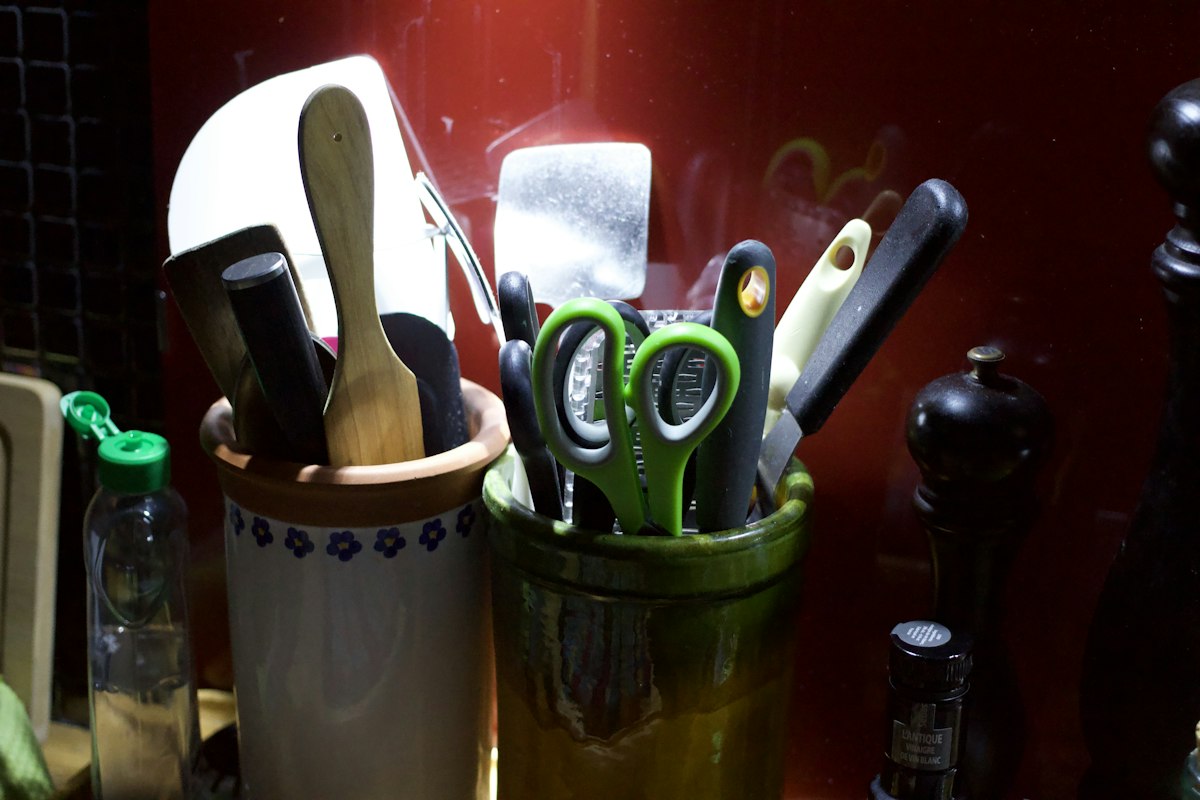
Notice which items you move before beginning the task. Those repeated movements reveal the objects most likely to need another home. Keep frequently used tools accessible, while respecting appliance instructions and food preparation needs. A counter can look tidy and still work badly if the useful items are difficult to reach.
Move one occasional appliance
If an appliance is rarely used, consider a suitable storage location that can support it safely. Do not put a heavy object somewhere awkward to lift. Test the change for a week before reorganizing the entire kitchen. The question is whether the freed space helps more than the extra step of taking the appliance out.
Group the daily items carefully
A washable tray can gather a few small objects, but it should not collect every bottle in the kitchen. Keep cleaning products separate from food and follow their storage instructions. Leave enough room to clean the surface around the group. If the tray gets in the way of preparation, make the group smaller.
Protect the useful gap
Treat the open area as working space rather than an invitation to add decoration. After cooking, return tools to their places and clean the surface appropriately. If something repeatedly lands there, find out where it is headed. A little routing decision often protects the counter better than a reminder to keep it clear.
Which kitchen task would benefit from one clear stretch of counter?
This is an original editorial example, drafted with AI assistance for the Little Days preview. It is not a submitted user story or a claim of personal experience. The photo is illustrative stock photography.