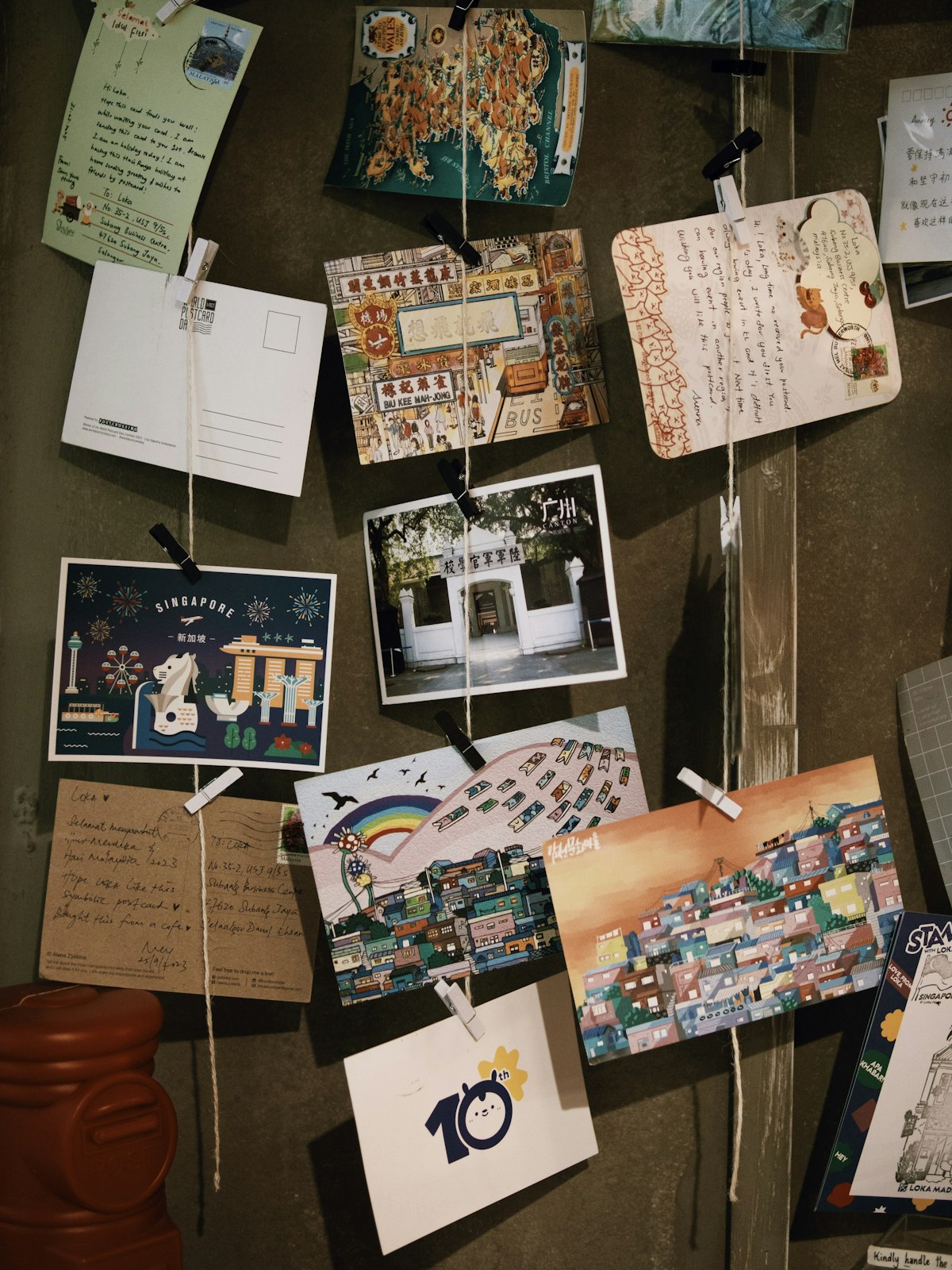
A postcard from a friend, a small print, and a ticket from an ordinary afternoon can make a personal display. The collection does not need to tell your entire life story. A few pieces you want to see this month are enough.
Choose a small area
Use a noticeboard, a short shelf, or another suitable display space. Check the surface and the mounting product instructions before attaching anything, especially in a rental. Leave switches and practical fixtures accessible. A clearly bounded area makes it easier to select a handful of pieces without turning the project into a whole-room redesign.
Arrange on a flat surface first
Lay the pieces out on a table and try a loose grouping. You can align one edge, keep similar gaps, or center a larger card among smaller ones. Choose the arrangement that is easy to look at, not the one that requires perfect symmetry. Take a reference photo if you want help recreating it.
Protect what matters
Keep irreplaceable or delicate originals away from damaging light and unsuitable adhesives. A copy may be more appropriate for a bright display spot. Check that tickets and letters do not reveal private information before photographing the arrangement for sharing. Sentimental paper can remain meaningful even when the original stays safely stored elsewhere.
Let the selection change
Keep the remaining pieces in a labeled envelope or folder. Swap one when a new card arrives instead of expanding the display indefinitely. Writing the date on the storage envelope can help you remember the period it represents. The gallery becomes a changing view of everyday interests rather than a permanent decorating decision.
Which small paper keepsake would you like to see more often?
This is an original editorial example, drafted with AI assistance for the Little Days preview. It is not a submitted user story or a claim of personal experience. The photo is illustrative stock photography.