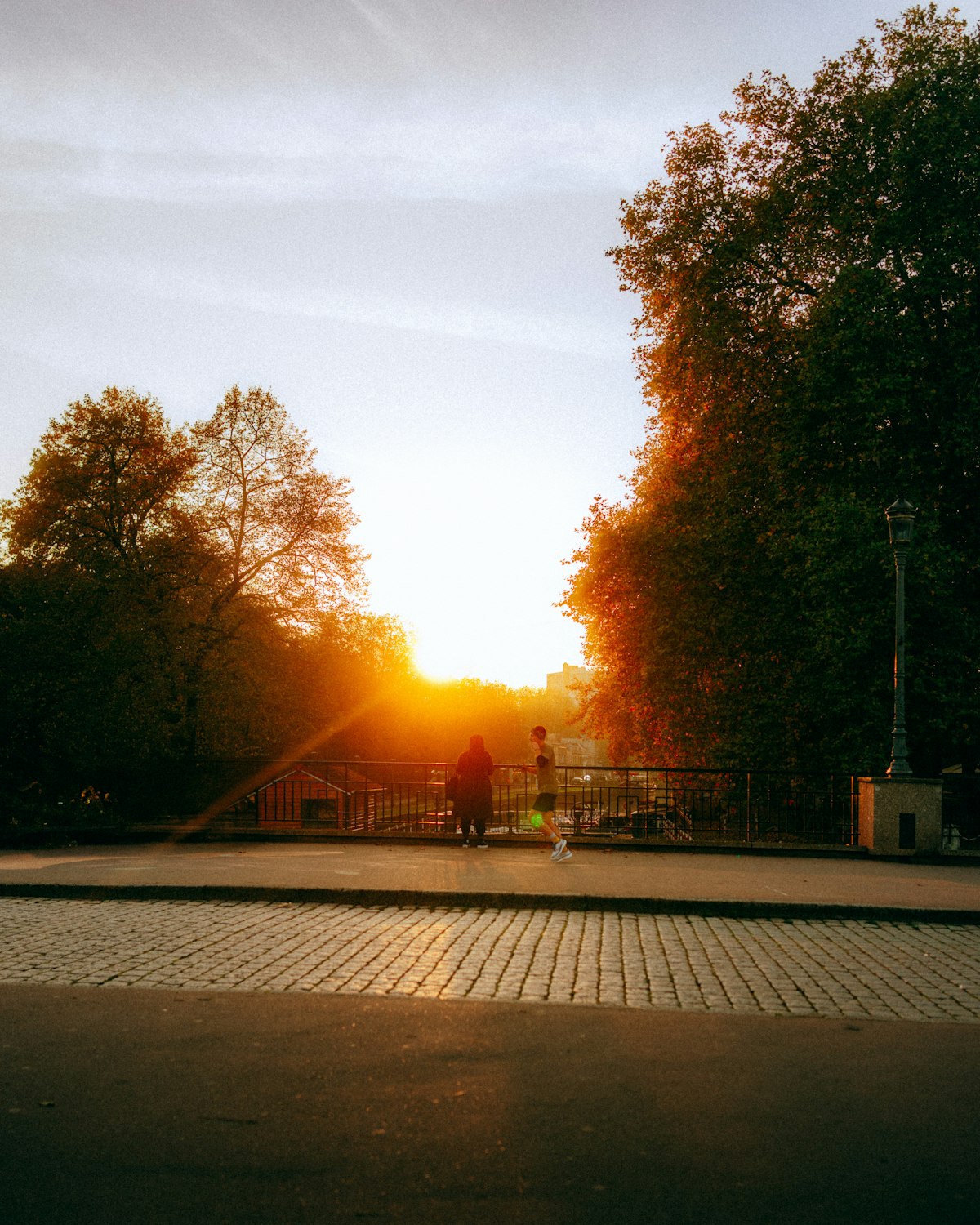
Evening light can change the color of an ordinary wall or a familiar line of trees. You do not need a dramatic overlook to notice it. A nearby public place with a straightforward route home may be a better setting for a short, repeatable outing.
Choose the return as carefully as the view
Check current closing times and the expected light conditions. Pick a location where you can leave comfortably before access becomes difficult. Consider transport, visibility, and the route back. The photograph or view should never depend on staying beyond a permitted time or reaching a place that feels unsafe.
Arrive with a little room to wait
Get there early enough to settle without rushing. You can sit or stand in a suitable public space and watch the scene change. Keep pathways clear and avoid setting up equipment where it blocks others. A phone or no camera at all is enough for this kind of observation.
Look beyond the bright sky
Notice how the light falls on nearby surfaces. A bench, doorway, or patch of grass may show the change more clearly than the horizon. If photographing, take a few considered frames and then look directly at the scene, avoiding staring at the sun. The experience can remain enjoyable even if clouds hide the color you expected.
Leave while the plan still works
Follow your planned departure time rather than waiting indefinitely for a better moment. Note the location and what you liked about it. Returning another day may reveal a different scene. A pleasant evening pause is worth repeating when its travel and timing stay as simple as the view itself.
Which nearby place looks different in the last light of the day?
This is an original editorial example, drafted with AI assistance for the Little Days preview. It is not a submitted user story or a claim of personal experience. The photo is illustrative stock photography.