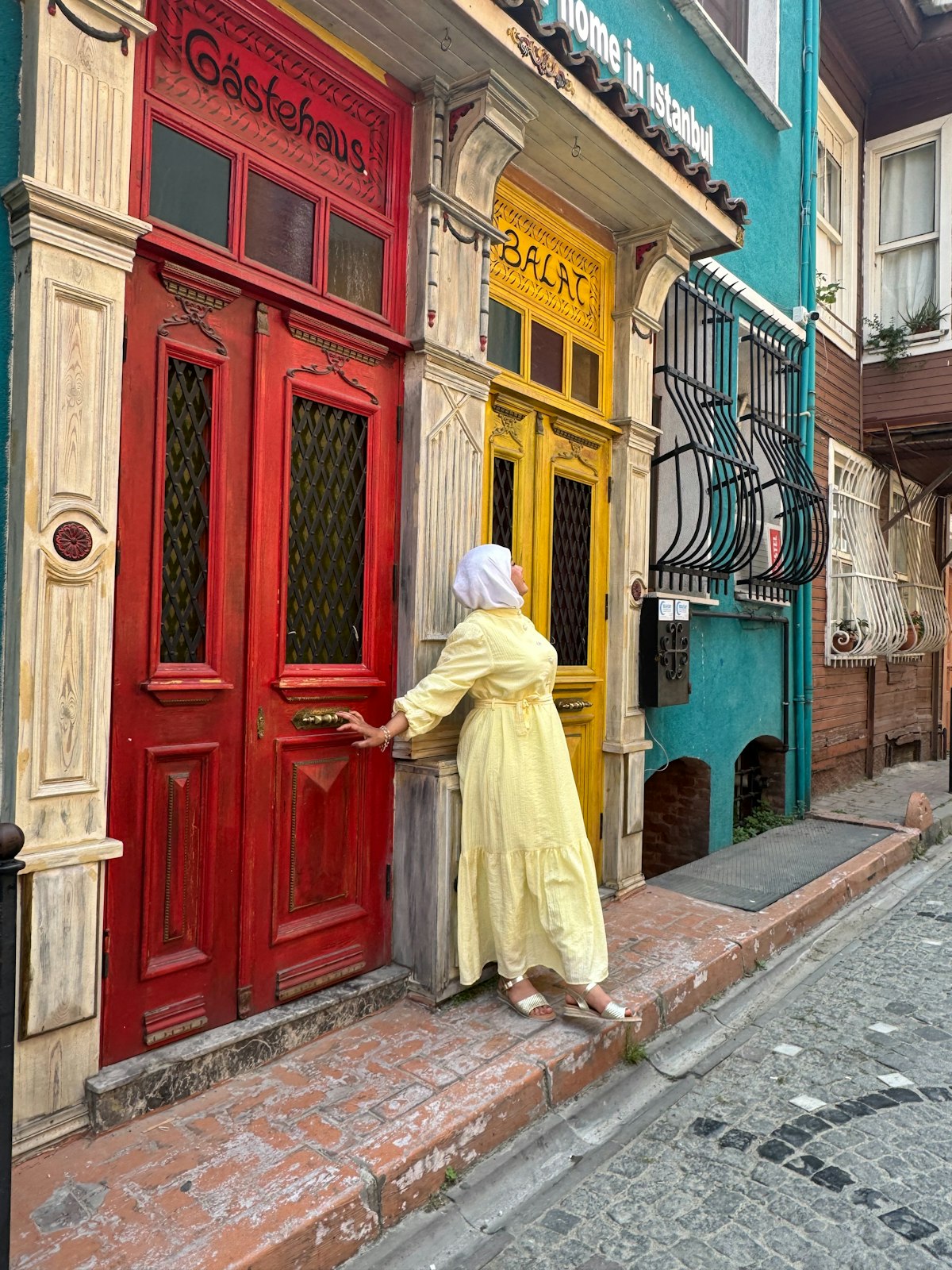
A familiar street can contain a surprising variety of doorways: painted wood, narrow glass panels, worn stone steps, or a carefully chosen number. Looking for one architectural feature gives a short walk a focus without needing to go somewhere new.
Stay with public viewpoints
Observe from public paths and keep moving where a narrow sidewalk needs to remain clear. Do not enter private property or approach a home for a better view. If taking pictures, avoid identifiable residents, private interiors, and unnecessary address details. The exercise is about visible design features, not documenting someone’s household.
Choose a feature to compare
Look at color, shape, handles, or the relationship between a doorway and its surrounding wall. You can notice three examples without trying to inventory the entire street. A single feature makes the walk more focused and gives you a reason to look closely at places you usually pass without much attention.
Describe what you can actually see
Use plain observations such as narrow green door or arched stone surround. Avoid guessing the building’s age or architectural history from appearance alone. If a public information plaque provides context, note it separately. Keeping observation distinct from interpretation makes your little record more accurate and easier to revisit.
Bring back a small design idea
A color pairing or a simple line drawing may be enough to remember the walk. You do not need to publish photographs of private homes. If the feature inspires a project, adapt the general idea to your own space and circumstances. The outing can end with a page of shapes rather than a list of renovations.
Which detail do you tend to notice on a building first?
This is an original editorial example, drafted with AI assistance for the Little Days preview. It is not a submitted user story or a claim of personal experience. The photo is illustrative stock photography.