A puzzle can be an enjoyable way to spend part of an evening without needing to finish anything. The useful preparation is a place where the pieces can stay together and a clear understanding of when the table needs to do another job.
Choose a size that fits
Check the finished dimensions before opening the box. Leave room around the edges for loose pieces and the reference image. If the table is shared, use an appropriate movable surface that supports the puzzle securely. A smaller puzzle that fits your life may offer more enjoyment than a large one that makes every meal difficult.
Sort only enough to begin
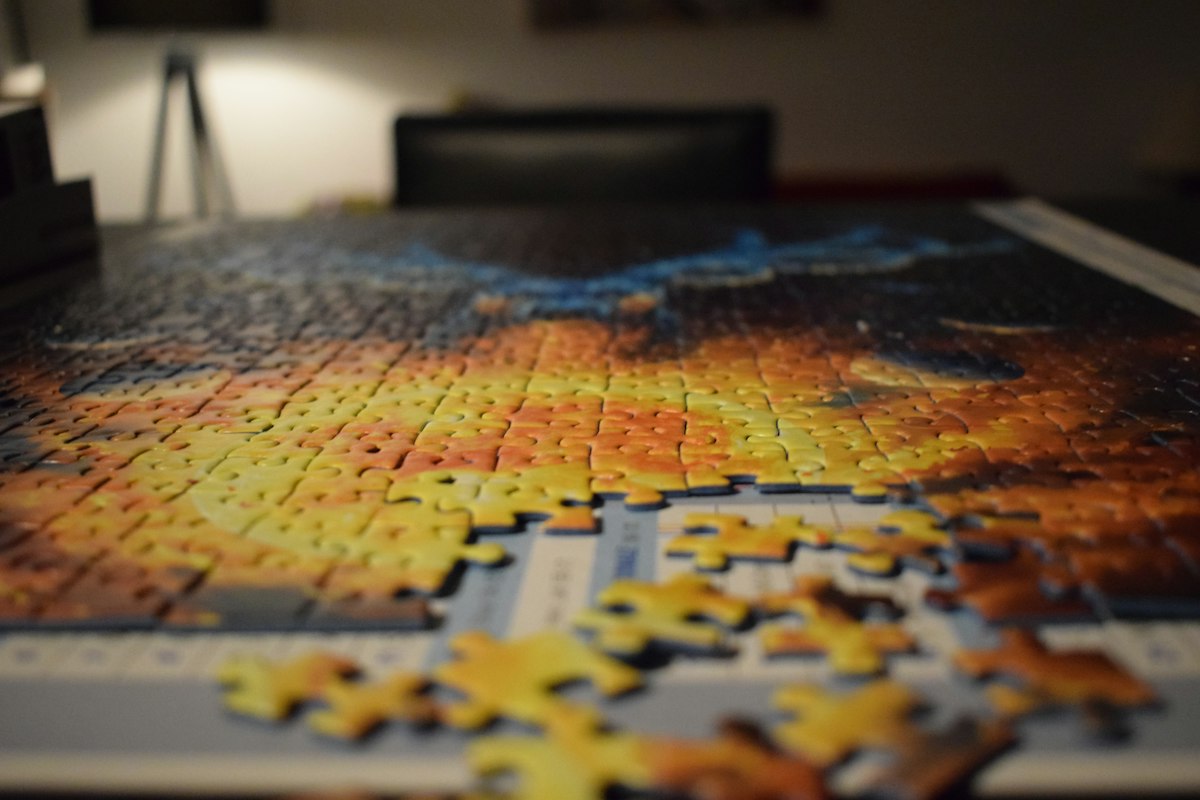
Separate a few obvious groups, such as an edge, a bold color, or a recognizable object. You do not need to classify every piece before placing the first one. Keep loose pieces in shallow containers if that helps. The sorting should support the activity rather than become a task that delays all the pleasure.
Work on an inviting patch
Choose a section that catches your attention. If it becomes frustrating, move to another part or stop for the evening. There is no required pace. When sharing the puzzle, agree on whether people want suggestions or prefer to find their own pieces. A little room for different approaches keeps the table comfortable.
Give stopping a simple routine
Put loose pieces somewhere secure and keep the reference nearby. Take a quick progress photo only if you would enjoy it. Return later without treating the unfinished section as a backlog. The puzzle has already served a purpose if spending time with it was pleasant, even before the final piece arrives.
Do you start with the edges or the most interesting part of the picture?
This is an original editorial example, drafted with AI assistance for the Little Days preview. It is not a submitted user story or a claim of personal experience. The photo is illustrative stock photography.