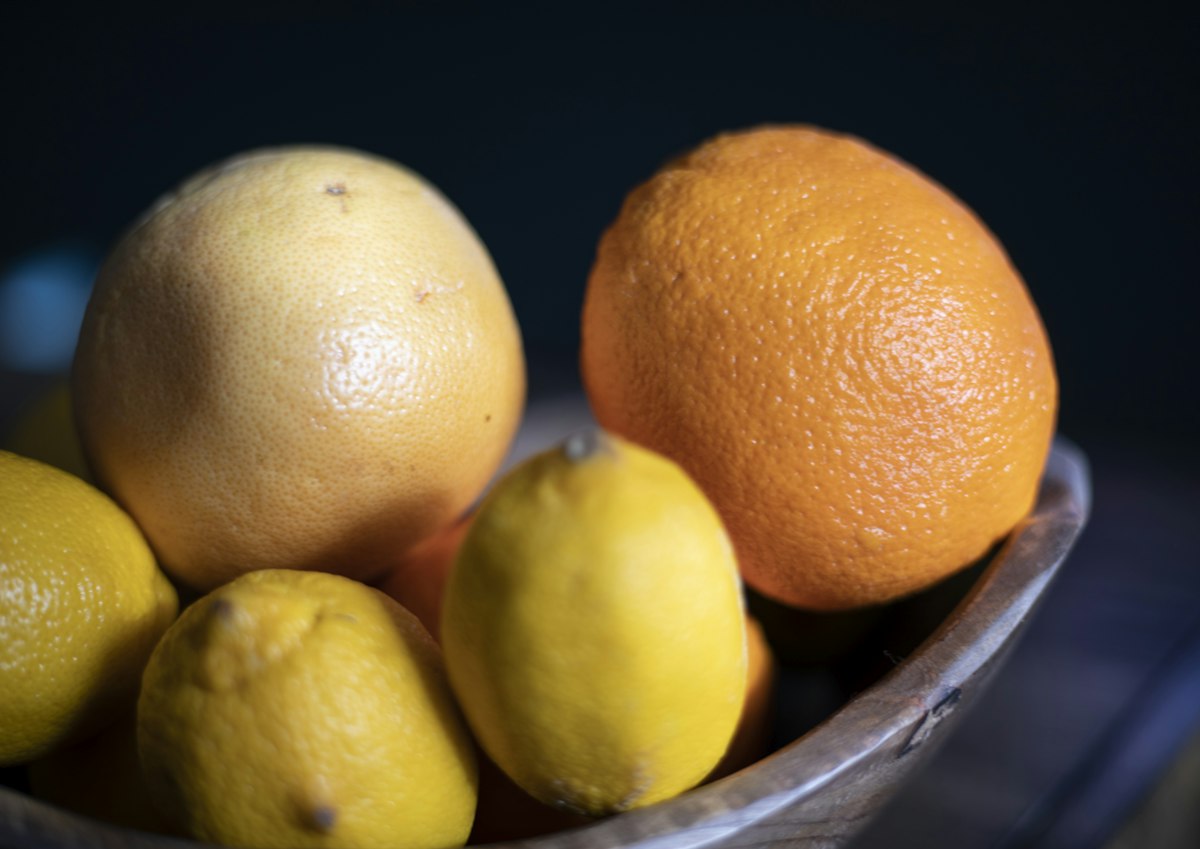
An orange or lemon can give an ordinary kitchen moment a clear sensory detail: the color of the peel, the scent when it opens, or the sharpness of a small taste. You can appreciate those things while making something very simple.
Choose how you will use it
Buy citrus for an actual snack or recipe rather than a bowl you hope to use eventually. Different varieties suit different purposes, and personal preference matters. Check the recipe if you are baking or preserving. For a simple snack, choose a fruit you enjoy eating as it is.
Prepare a modest plate
Wash the fruit appropriately and use a suitable cutting board and knife if slicing is needed. Arrange only the amount you intend to serve, with a place for peels or seeds. A small plate of orange segments can stand on its own. It does not need several additional ingredients to become worth noticing.
Add brightness deliberately
If using lemon with a meal or drink, add a little and taste before adding more. Think about the balance of the whole dish rather than treating citrus as an automatic improvement. Keep a note if a particular pairing works. A measured change is easier to repeat than an enthusiastic squeeze you cannot remember.
Use the observation in your next shop
Notice which fruits you reached for and which uses felt effortless. Adjust the amount you buy next time. Follow suitable storage guidance for whole and cut fruit. A small ingredient becomes part of an everyday routine when its use is clear, not simply because it looks beautiful on the counter.
Which citrus scent immediately brings a kitchen memory to mind?
This is an original editorial example, drafted with AI assistance for the Little Days preview. It is not a submitted user story or a claim of personal experience. The photo is illustrative stock photography.