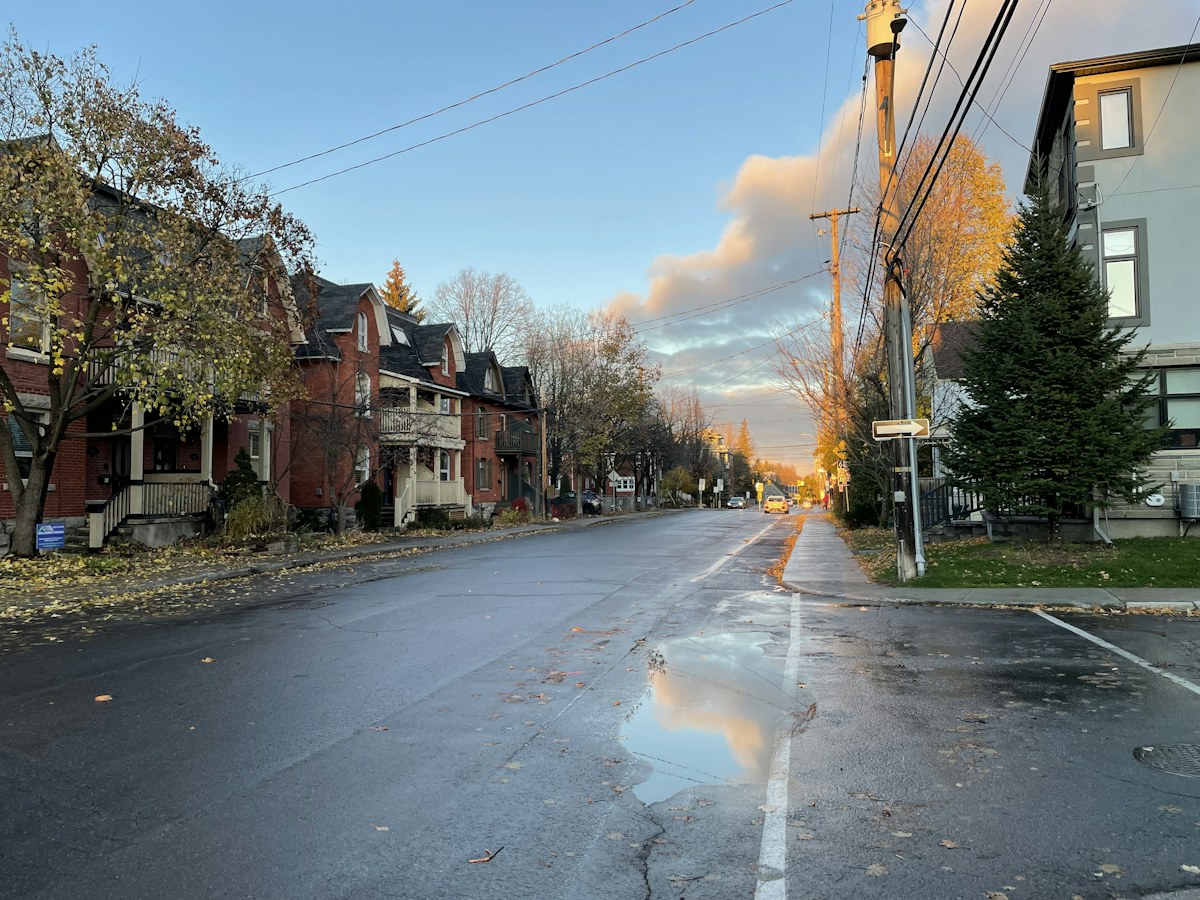
You may know the fastest route through your neighborhood so well that very little of it reaches your attention. Choosing a simple theme can change what you notice without requiring a new destination.
Pick a theme you can spot easily
Look for a color, an interesting shape, or a particular kind of detail such as windows or street trees. Keep the theme broad enough that you do not have to search hard. You are giving your attention a starting point, not turning the walk into a competition to collect a certain number of examples.
Stay on the route that suits you
Use public paths and places you are permitted to enter. Keep aware of traffic, other people, and the conditions around you rather than focusing entirely on a photograph. If stopping would obstruct a path, keep moving and notice something else. The exercise should fit around an ordinary comfortable outing, including one that is short or uses a familiar accessible route.
Make a small record afterward
Write three details you remember when you return. Try describing them without judging whether they were beautiful: a blue gate, a round window, a leaf caught against a fence. Concrete descriptions often bring the route back more clearly than a general note saying it was a nice walk. You can sketch the shapes if words are not what you feel like using.
Change the theme another day
The same route can offer a different experience when you look for something else. If you share your observations, avoid publishing private addresses, identifiable strangers, or details that reveal another person’s routine. You can describe the type of place without pinpointing it. The discovery worth sharing is the change in attention, not a map to somebody’s home.
Which ordinary neighborhood detail do you find yourself noticing again and again?
This is an original editorial example, drafted with AI assistance for the Little Days preview. It is not a submitted user story or a claim of personal experience. The photo is illustrative stock photography.